Have you ever wondered whether “Aunty” or “Auntie” is the correct way to address or describe your aunt? You are not alone. Both spellings appear in everyday conversations, family messages, social media, books, and informal writing, which makes the difference easy to miss.
The confusion often comes from regional preferences, pronunciation, and cultural usage rather than a major difference in meaning. In most cases, “auntie” is more common in American English and casual communication, while “aunty” is widely used in British English, South Asian English, and other regional varieties.
Understanding Aunty vs Auntie can help you choose the form that fits your audience, tone, and context. In this guide, you’ll learn their meanings, spelling differences, regional usage, pronunciation, examples, and common writing situations. By the end, you’ll know exactly when to use “Aunty” or “Auntie” with confidence.
Quick Answer:
“Aunty” and “Auntie” have the same basic meaning: they are informal ways to refer to an aunt, especially in family or friendly conversations. The main difference is spelling and regional preference, not meaning.
“Auntie” is generally more common in American English and is also widely used in British English. “Aunty” is especially common in British English, South Asian English, Australian English, and some other English-speaking communities. Both forms can be correct depending on the region, audience, and context.
For example:
- My Auntie Sarah is visiting us.
- My Aunty Sarah is visiting us.
Both sentences communicate the same idea. The choice often reflects personal preference, family tradition, or local English usage. In formal writing, however, aunt is usually the safest and most standard choice.
Understanding this small spelling difference can help you sound more natural when writing family messages, social posts, stories, school assignments, or everyday conversations.
What Does “Auntie” Mean?
“Auntie” is an informal or affectionate form of “aunt.” It can describe the sister of your parent, your parent’s sister-in-law, or, in some cultures, a familiar older woman who is treated with family-like respect.
The word often carries a warm, friendly, and affectionate tone. Children commonly use “Auntie” when speaking directly to a relative, such as “Auntie Maria, can you help me?”
It can also appear outside a strict family relationship. In many communities, people use Auntie as a respectful way to address an older woman they know well.
Examples:
- Auntie Lisa made us dinner.
- I called my Auntie after the wedding.
- Auntie, could you please pass the tea?
- The children love visiting their Auntie.
In American English, “auntie” is a familiar spelling, especially in informal family communication. However, aunt remains more common in formal contexts.
A useful point to remember is that “Auntie” does not usually create a different family relationship from “aunt.” It mainly changes the tone and level of familiarity.
What Does “Aunty” Mean?
“Aunty” is another informal spelling of “aunt.” Like “auntie,” it can refer to a family member or a woman who is addressed with affection and respect.
The spelling “aunty” is particularly common in British English and South Asian English, including everyday communication in countries such as India and Pakistan. It is also found in other English-speaking regions.
For example:
- My Aunty is coming over this weekend.
- I asked my Aunty for advice.
- Aunty, would you like some tea?
- My Aunty lives in Lahore.
In some cultures, Aunty has a broader social meaning. A child may call a close family friend Aunty even when she is not a biological aunt. This usage often shows respect, affection, or familiarity.
The important thing is that “aunty” and “auntie” are not normally different words with different definitions. They are spelling variants shaped by regional English, family habits, and cultural traditions.
Is “Auntie” the Correct Spelling?
Yes, “auntie” is a correct spelling. It is a recognized informal form of “aunt” and appears frequently in everyday English.
You can use auntie when the situation is casual, personal, affectionate, or family-related. It works especially well when speaking directly to someone or referring to a relative in an informal setting.
For example:
“Auntie, are you coming to dinner?”
Here, “Auntie” sounds natural because the speaker is addressing a family member in a friendly way.
However, “aunt” is generally better for formal writing:
My aunt is a professor at the university.
Using “auntie” in a formal report would sound more personal and conversational. The spelling itself is not wrong; the context determines whether it is appropriate.
Another important point is capitalization. When Auntie is used like a name or direct form of address, capitalization is common:
Auntie, could you help me?
When it is used as a general noun, lowercase is usually appropriate:
My auntie lives nearby.
So, “auntie” is correct, but your choice should match the tone and situation.
Is “Aunty” the Correct Spelling?
Yes, “aunty” is also a correct spelling. It is an established informal variant of “auntie,” although its popularity differs across English-speaking regions.
You will often see “aunty” in British English, South Asian English, Australian English, and other regional varieties. It is especially familiar in family conversations and culturally influenced forms of English.
For example:
My Aunty is visiting us this weekend.
Or:
Aunty, would you like some coffee?
Neither example is grammatically wrong. The spelling simply reflects a particular regional or personal preference.
A common mistake is assuming that “aunty” must be incorrect because “auntie” looks more familiar. English contains many spelling variations that developed through different regions and language traditions.
If your audience primarily uses British or South Asian English, “aunty” may feel completely natural. If you are writing for a general American audience, “auntie” may feel more familiar.
For formal situations, however, aunt remains the simplest option regardless of region.
Regional Preferences: Aunty vs Auntie
Different regions have distinct tendencies when choosing between Aunty or Auntie.
British English:
- “Aunty” is widely used in the UK, especially in family letters or invitations.
- Example: “We visited Aunty Margaret last weekend.”
American English:
- “Auntie” is more common in the US, often reflecting a casual, affectionate tone.
- Example: “Auntie Linda baked my favorite cookies.”
Indian and Commonwealth English:

- Both terms are used interchangeably, though “Aunty” is slightly more formal.
- Example: “My Aunty from Delhi is visiting us tomorrow.”
Understanding these preferences ensures your usage aligns with the regional context, making your English sound natural.
When to Use Aunty or Auntie
The choice between Aunty or Auntie depends on tone, familiarity, and context:
- Formal or semi-formal letters: Use Aunty to maintain a slightly polished tone.
- Casual conversation or messaging: Auntie feels warmer and more affectionate.
- Public events or invitations: Either can work, but consistency matters.
Examples:
- Speaking to your mother’s sister during a casual visit: “Hi Auntie Sarah, how are you?”
- Writing a family invitation: “We are thrilled to invite Aunty Mary to our wedding.”
- Sharing a photo on social media: “Fun times with Auntie Lucy!”
Common Mistakes to Avoid
- Mixing spellings in a single document: Pick one style and stay consistent.
- Using Auntie in formal letters: It may appear too casual.
- Confusing pronunciation with spelling: Both sound similar, but clarity in writing matters.
- Assuming one spelling is universally correct: Consider the regional and social context.
Read More: Other ways to say “Please Let Me Know If This Works For You”
Scenarios and Examples
Scenario 1: Casual family gathering
- “Hi Auntie Jane, can you help me with this recipe?”
- Here, “Auntie” conveys warmth and closeness.
Scenario 2: Invitation or greeting card
- “We look forward to seeing Aunty Rita at the celebration.”
- “Aunty” is slightly more formal and suits printed materials.
Scenario 3: Writing a blog or online post
- “Sharing my childhood memories with Auntie Rose.”
- Friendly, engaging, and perfect for informal content.
Pronunciation Tips
Despite the spelling differences, Aunty and Auntie are usually pronounced the same way: /ˈɑːnti/ or /ˈænti/ depending on the accent.
- British pronunciation: /ˈɑːnti/
- American pronunciation: /ˈænti/
Being aware of pronunciation ensures you’re understood in both casual and formal settings.
Emotional Nuance
Auntie often conveys a warmer, affectionate feeling, making it suitable for:
- Talking to children
- Friendly emails
- Social media posts
Aunty can feel slightly more formal and respectful, making it suitable for:
- Invitations
- Letters
- Communicating with elder relatives
Read More: Funny Ways to Say “Happy Holidays” (With Examples)
Aunty or Auntie in Writing

Consistency is key: Choose one spelling and stick with it throughout your text.
Examples:
- Correct: “We are excited to see Aunty Linda at the party.”
- Incorrect: “We are excited to see Auntie Linda at the party” (if your style is formal).
- Correct in casual content: “Thanks for helping me, Auntie Jenny!”
Fun Fact: Pop Culture Influence
Many English speakers pick Auntie or Aunty based on cultural references:
- Children’s books and shows often use “Auntie” for a friendly tone.
- British media tends to favor “Aunty,” which is why BBC is sometimes affectionately called “Aunty BBC.”
The Popularity of Aunty vs Auntie Over Time
The use of Aunty or Auntie has evolved significantly over the decades. In the early 20th century, “Aunty” was the more commonly seen spelling in print, especially in formal letters and newspapers. As English became more global and informal writing gained popularity, “Auntie” started appearing more frequently, particularly in personal letters, children’s books, and casual speech.
Trends to note:
- 1950s–1970s: “Aunty” dominated in Commonwealth countries.
- 1980s–2000s: “Auntie” gained traction in American English and pop culture.
- Present day: Both spellings are widely recognized, but usage still depends on region and context.
Aunty or Auntie in Family Culture
Family traditions often influence whether people use Aunty or Auntie. In some families, “Aunty” is considered respectful and proper, while “Auntie” is used to express warmth and closeness.
Examples in family settings:
- Calling your mother’s sister “Auntie Meera” when speaking to younger cousins.
- Writing a greeting card: “With love, Aunty Grace.”
Cultural norms also affect usage. In India, Singapore, and parts of the UK, “Aunty” is commonly used even among close friends, while in the US, “Auntie” carries a personal, affectionate vibe.
Famous People Who Prefer Aunty or Auntie
Certain public figures and celebrities are associated with one spelling or the other, which influences popular usage.
- Aunty: The BBC is famously nicknamed “Aunty BBC,” reflecting the British preference for the spelling.
- Auntie: American celebrities often use “Auntie” in memoirs and interviews, giving the word a warm, approachable feel.
These choices can subtly influence readers and viewers, especially in informal content and social media.
How Kids Usually Say Aunty or Auntie
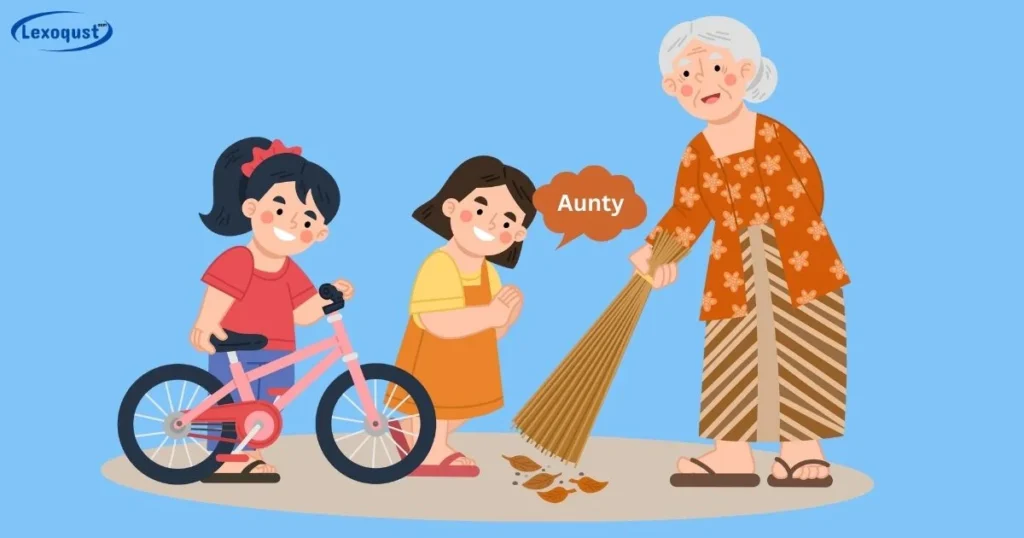
Children often choose the spelling that sounds easiest to say, rather than following formal rules. As a result:
- Auntie is more common in everyday speech because it rolls off the tongue easily.
- Kids may say “Aunty” after seeing it in writing, but pronunciation usually stays the same.
- Terms of endearment like “Auntie Boo” or “Auntie Lulu” are frequent in casual family conversations.
Teaching children either version is flexible, as both are correct, but encouraging consistency helps them learn proper writing.
Fun Facts About the Word Aunty vs. Auntie
- The word “aunt” originates from Latin amita, meaning father’s sister.
- “Auntie” is often used in children’s literature for a softer, friendlier tone.
- In some countries, “Aunty” is used even for close family friends, not just relatives.
- British media often refers to the BBC as “Aunty BBC”—a nickname that stuck for decades.
- Pop culture, including movies and cartoons, often uses “Auntie” to show warmth or humor.
How Pronunciation Differs: Aunty vs Auntie
| Word | Pronunciation (UK) | Pronunciation (US) | Tone/Usage Notes |
| Aunty | /ˈɑːnti/ | /ˈɑːnti/ | Slightly formal, British/Indian English preferred |
| Auntie | /ˈɑːnti/ or /ˈænti/ | /ˈænti/ | Casual, affectionate, common in American English |
Aunty or Auntie: Which One Is More Common?
There is no single answer for every English-speaking country because usage changes by region. In general, “auntie” has strong usage in American English, while “aunty” is particularly common in British and South Asian English.
The difference is not really about correctness. It is about language habits. People tend to adopt the spelling they see around them in their families, schools, communities, books, and online spaces.
For example, an American speaker might naturally write:
“My Auntie is coming tomorrow.”
A speaker from South Asia might more naturally write:
“My Aunty is coming tomorrow.”
Both sentences are perfectly clear.
If you are creating content for a broad international audience, “auntie” may be more immediately recognizable to many readers. But if your content targets a specific region, following that region’s preferred spelling can make your writing feel more authentic and natural.
For formal documents, academic writing, or professional communication, neither informal form is usually necessary. “Aunt” is concise, neutral, and widely understood.
So, instead of asking which spelling is universally “right,” ask: Which spelling will sound most natural to my readers?
Aunty vs Auntie: What’s the Difference?
The main difference between “aunty” and “auntie” is spelling and regional preference. Both generally mean the same thing and function as informal forms of “aunt.”
| Feature | Auntie | Aunty |
|---|---|---|
| Meaning | Informal form of aunt | Informal form of aunt |
| Pronunciation | Usually the same | Usually the same |
| Tone | Friendly and affectionate | Friendly and affectionate |
| US usage | Common | Less common |
| UK usage | Common | Also common |
| South Asian usage | Common | Very common |
| Formal writing | Usually avoid | Usually avoid |
| Standard formal term | Aunt | Aunt |
The difference becomes more noticeable when you consider regional English. Someone raised in the United States may naturally write “Auntie,” while someone from South Asia may naturally choose “Aunty.”
There can also be a difference in personal preference. Families sometimes consistently use one spelling in cards, text messages, social media posts, and family documents.
For example:
- American-style: “I’m going to visit my Auntie.”
- South Asian-style: “I’m going to visit my Aunty.”
Both are understandable and generally correct.
The easiest rule is: choose the spelling that fits your audience and regional English style. If you want a more universally formal option, simply use “aunt.”
Aunty vs Auntie: Which One Feels Right?
Choosing between “aunty” and “auntie” often comes down to what feels natural in your family, culture, and community.
If you grew up hearing people say “Auntie,” that spelling may feel warmer and more familiar. If your family uses “Aunty,” changing it simply because another spelling is common elsewhere may feel unnatural.
The emotional tone can also matter. Both forms can sound:
- Affectionate: “I love you, Auntie!”
- Friendly: “Hi, Aunty! How are you?”
- Respectful: “Thank you, Auntie.”
- Family-oriented: “We are visiting our Aunty this weekend.”
In some cultures, these terms also carry social respect. A child may call a family friend “Aunty” or “Auntie” as a sign of closeness and respect, even without a direct family connection.
If you’re writing a personal message, use the form that your family normally prefers. For social media, either can work. For formal or academic writing, choose aunt unless the informal term is part of a quotation or specific cultural context.
The best choice is therefore not always the one that looks most familiar—it is the one that fits the relationship, audience, and setting.
Aunty or Auntie in English: Regional Usage Explained
English changes naturally from one region to another, and “aunty” vs “auntie” is a good example of this. The two forms share the same basic meaning, but speakers in different English-speaking communities may favor different spellings.
American English:
“Auntie” is a familiar informal form, especially in family conversations. The standard formal word remains “aunt.”
British English:
Both “auntie” and “aunty” are used. “Auntie” is widely recognized, while “aunty” also appears naturally in informal communication.
South Asian English:
“Aunty” is especially common in countries such as India and Pakistan. It can refer not only to a relative but also to an older woman known to the family or community.
Australian and other varieties:
Both spellings can be encountered, with personal and local preference influencing the choice.
This regional variation explains why people sometimes disagree about whether “aunty” or “auntie” is correct. They may simply be following different varieties of English.
The simplest way to remember the distinction is:
Aunt = neutral and standard
Auntie/Aunty = informal, affectionate, and regional
So, when writing for a specific audience, consider local English conventions. When you need a neutral form that works almost everywhere, “aunt” is the safest choice.
Aunty or Auntie in the Oxford Dictionary
Both “aunty” and “auntie” are recognized English words, and major dictionaries treat them as informal forms of “aunt.” Their meanings are closely related, so the main difference usually involves spelling, regional usage, and personal preference rather than meaning.
The Oxford English Dictionary and Oxford’s dictionary resources document auntie as an informal term for an aunt. Aunty is also established in English, particularly in regional varieties and informal speech.
For example:
- My auntie lives in London.
- My aunty lives in Lahore.
Both sentences are understandable and natural. The spelling you choose may reflect the variety of English you use.
One important distinction is formality. Aunt is the neutral term, while aunty/auntie usually sounds more friendly, affectionate, or conversational. This makes the shorter forms common in family conversations, children’s speech, messages, and informal writing.
So, if you encounter both spellings in dictionaries or published writing, don’t assume one is automatically wrong. English often preserves multiple forms because different communities develop different language habits.
Should You Capitalize “Aunty” or “Auntie”?
Whether you capitalize “Aunty” or “Auntie” depends on how you use the word in a sentence. The basic rule is similar to the capitalization of other family terms, such as Mom, Dad, Grandma, or Uncle.
Capitalize the word when it functions like a name or direct form of address:
- Auntie, can you help me?
- I love you, Aunty.
- We are going to visit Auntie Sarah.
- Thank you, Aunty, for everything.
Use lowercase when the word functions as a common noun:
- My auntie lives nearby.
- I visited my aunty last weekend.
- Her auntie gave her a gift.
A simple test can help: If you could replace the word with the person’s name, capitalization may be appropriate.
Compare:
I asked Auntie for help.
with:
I asked my auntie for help.
The first treats “Auntie” almost like a name. The second describes a family relationship.
For formal writing, aunt is often the cleanest choice, especially when you want a neutral style.
Read more: More Then or More Than: What’s Correct? Easy Grammar Guide
What Is the Plural of Aunty?
The plural of “aunty” is “aunties.” You simply change the -y to -ies, following the usual English spelling pattern for words ending in a consonant followed by y.
For example:
- One aunty → two aunties
- My aunty → my aunties
- That aunty → those aunties
Example:
My aunties always make family gatherings fun.
The same pattern applies to auntie, but because it ends in -ie, its plural is “aunties” as well:
- One auntie → two aunties
- My auntie → my aunties
This means that, interestingly, both spellings have the same plural form: “aunties.”
A common mistake is writing “aunties” as “auntys.” That form is not the standard plural spelling.
Another useful point is that aunties can refer to biological relatives, relatives by marriage, or women who receive the informal title Aunty/Auntie in certain cultural settings.
How to Remember Aunty vs Auntie
The easiest way to remember “aunty vs auntie” is to focus on the fact that both words mean the same basic thing. You are usually choosing between two informal spellings rather than two different meanings.
Try this simple memory trick:
Aunt + y = Aunty
Aunt + ie = Auntie
You can also connect each spelling with the English variety you see most often:
- Auntie → very familiar in American English and widely used elsewhere.
- Aunty → especially familiar in British and South Asian English.
- Aunt → the safest neutral and formal choice.
Another helpful rule is:
Don’t ask, “Which word has the right meaning?” Ask, “Which spelling fits my audience?”
For example, if your family has always written “Aunty,” there is no need to change it to “Auntie” simply because another region prefers that spelling.
If you are writing a formal report, however, use aunt unless the informal wording is important to the context.
This small distinction makes the choice much easier when you’re writing quickly.
Aunty vs Auntie: Which One Should You Use?
The best choice between “aunty” and “auntie” depends on your audience, region, relationship, and level of formality.
Use “auntie” when it matches your normal English variety or the style your readers expect. Use “aunty” when it feels natural within your regional or cultural context.
For example:
Casual family message:
Hi Auntie! Are you coming over tonight?
South Asian family context:
Hi Aunty! We are waiting for you.
Formal writing:
My aunt is visiting us this week.
There is no need to treat aunty as incorrect simply because another writer prefers auntie. Both can work naturally in informal English.
If you are unsure, consider these three questions:
- Who will read this?
- Which regional English am I using?
- Is the situation formal or casual?
For academic, business, legal, or professional writing, aunt is generally the better choice. For family texts, social media, personal stories, and casual conversations, either informal spelling can work.
The goal is not to find one spelling that wins every situation. The goal is to choose the form that sounds natural and appropriate for your context.
Which Spelling Works Best for Branding or Marketing?
For branding and marketing, the choice between “Aunty” and “Auntie” can matter more than it does in ordinary conversation. A brand name should feel natural to its target audience and communicate the right personality.
“Auntie” may feel familiar, warm, and approachable to a broad English-speaking audience. “Aunty” can create a stronger sense of community, culture, tradition, or regional identity, depending on the audience.
For example:
- Auntie’s Kitchen can sound warm and family-focused.
- Aunty’s Kitchen may create a more regional or culturally familiar feel.
Neither spelling is automatically better for marketing. The stronger choice depends on brand identity and audience expectations.
Before choosing one, consider:
- Target country or region
- Customer demographics
- Brand personality
- Cultural associations
- Ease of pronunciation
- Search behavior
- Domain and social media availability
If your business serves a specific cultural community, Aunty may feel more authentic. If you want a broader informal English feel, Auntie may be more immediately familiar.
Most importantly, choose one spelling and use it consistently across your website, logo, social profiles, packaging, and promotional materials. Consistency helps customers remember the brand and prevents unnecessary confusion.
Aunty vs Auntie: Common Mistakes to Avoid
Although “aunty” and “auntie” are simple words, writers often make mistakes when deciding which form to use. Most errors happen because people confuse regional preference with grammatical correctness.
Here are some common mistakes to avoid:
1. Assuming “Aunty” is always wrong
“Aunty” is a recognized informal spelling. It is especially common in several regional varieties of English.
2. Assuming “Auntie” is the only correct form
“Auntie” is common, but that does not make “aunty” incorrect.
3. Using an informal form in formal writing
In a business report or academic assignment, aunt usually sounds more appropriate than auntie or aunty.
4. Forgetting capitalization
When used as a name or direct address, capitalization may be appropriate:
Auntie, could you help me?
But:
My auntie lives nearby.
5. Writing the plural incorrectly
The plural of both forms is “aunties,” not “auntys” or “auntieses.”
6. Switching spellings randomly
If you choose Auntie for a personal story, don’t alternate between “Auntie” and “Aunty” without a reason.
The best approach is simple: understand the context first, then choose the spelling that fits your audience and writing style.
Read more: Bougie or Boujee: Meaning, Difference & Correct Usage
Quick Practice Routine for Using Aunty and Auntie Correctly
You do not need a complicated grammar lesson to master “aunty vs auntie.” A short practice routine can make the difference clear.
Start by writing three sentences with aunt:
My aunt lives nearby.
I visited my aunt yesterday.
My aunt gave me some advice.
Then make the sentences more informal by using auntie or aunty:
My auntie lives nearby.
I visited my aunty yesterday.
My auntie gave me some advice.
Next, practice capitalization:
Auntie, can you call me later?
Then compare it with lowercase usage:
My auntie called me later.
Finally, practice choosing the right form for different settings:
| Situation | Best Choice |
| Academic writing | Aunt |
| Business writing | Aunt |
| Casual family text | Aunty/Auntie |
| Direct address | Aunty/Auntie |
| Personal story | Aunty/Auntie |
| Regional or cultural writing | Preferred local form |
The key lesson is easy to remember: “Aunty” and “Auntie” usually share the same meaning, while “aunt” gives you the neutral formal option. Once you consider audience, region, tone, and context, choosing the right form becomes much easier.
FAQs About Aunty or Auntie
1. Are “Aunty” and “Auntie” interchangeable?
Yes, but usage depends on regional preference and tone. Auntie is more casual, while Aunty is slightly more formal.
2. Which is more British?
Aunty is more commonly used in British English, especially in letters and invitations.
3. Which is more American?
Auntie is widely used in American English and casual conversation.
4. Can I use “Auntie” in professional writing?
It’s better to use Aunty or simply “aunt” in professional or formal documents.
5. How should I choose between them?
Consider tone, audience, and region. Use Auntie for warmth, Aunty for slight formality, and stay consistent.
Wrap-Up
Choosing the correct spelling between Aunty or Auntie might seem minor, but it makes a noticeable difference in everyday English. Understanding the nuances helps you convey the right tone, whether casual, affectionate, or slightly formal. Remember, Auntie is warmer and ideal for casual interactions, while Aunty fits more polished contexts and regional preferences like British English.
Consistency is key once you pick a style, use it throughout your writing or conversation. By mastering these subtle differences, you enhance your English fluency, avoid awkward mistakes, and connect better with your audience or family. So next time you address your favorite aunt, you’ll know exactly which spelling feels natural and accurate, leaving a positive impression every time.

Hi! I’m Amelia Ashford, the admin of Lexoqust.com. Here, we dive deep into the world of synonyms to help you express yourself better.From everyday words to advanced vocabulary, Lexoqust makes your writing richer and more refined.